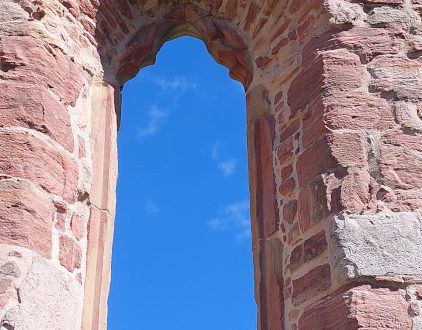
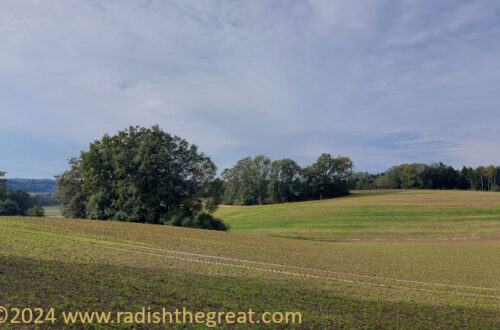
Last weekend we drove up to Suhl for the Patchworktage (Quilt Show, more or less) so we could see my Challenge Quilt. I’m not sure *that* was worth the time and money, but we made a nice weekend out of it. Suhl is in the Thüringer Wald, a mountainy forest region with a long history and lots of mythology. The region used to have a lot of mines, metalworking, and porcelain, there’s still some forestry and wood products, and there’s a lot of history. Today the big industries are vacations and winter sports; the East German teams trained there and the German teams still get a lot of athletes who grew up in the area, learning their craft.
My intention is to make multiple posts. (Why are you laughing? I haven’t written the jokes yet!)
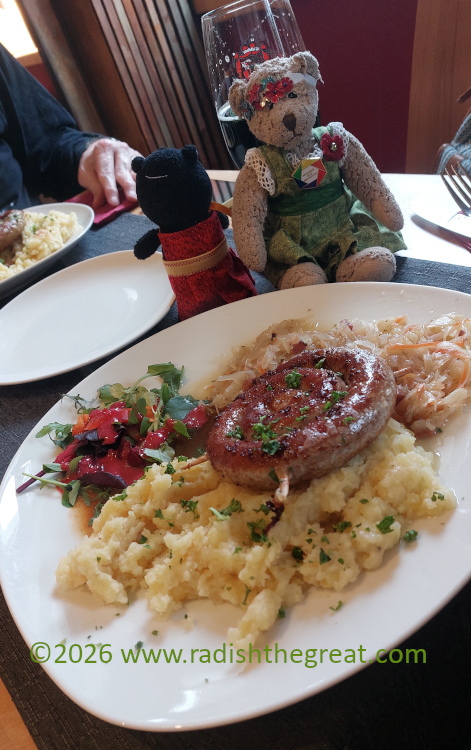
We begin, as always, with lunch. Traditional local bratwurst at Gasthaus Waldfrieden (forest peace) in Frauenwald. If you order it after 5 p.m. they grill it in front of you in a wood-fired stove in the dining room, but they were tasty cooked in the kitchen, and served with smashed potatoes and a mild sauerkraut. The Schwarzbier was also very good.
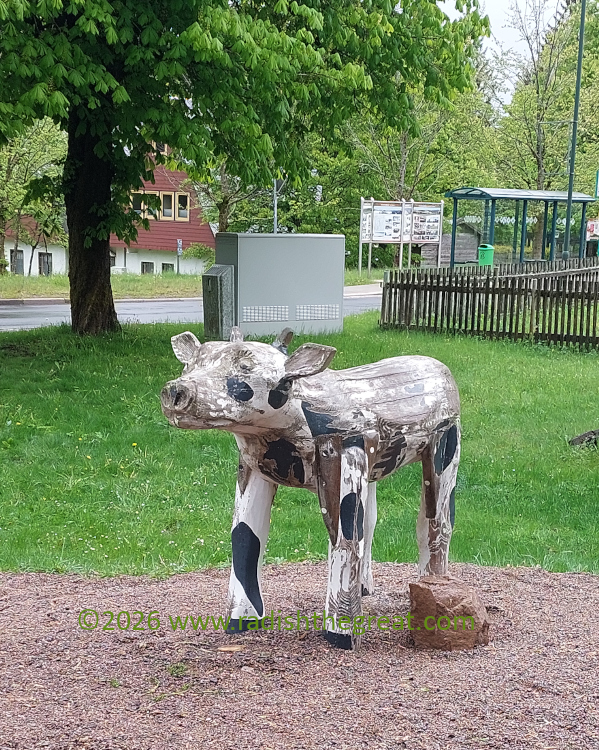
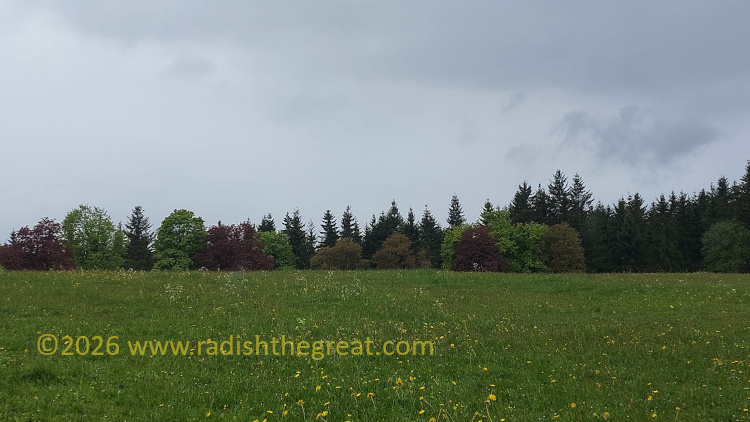
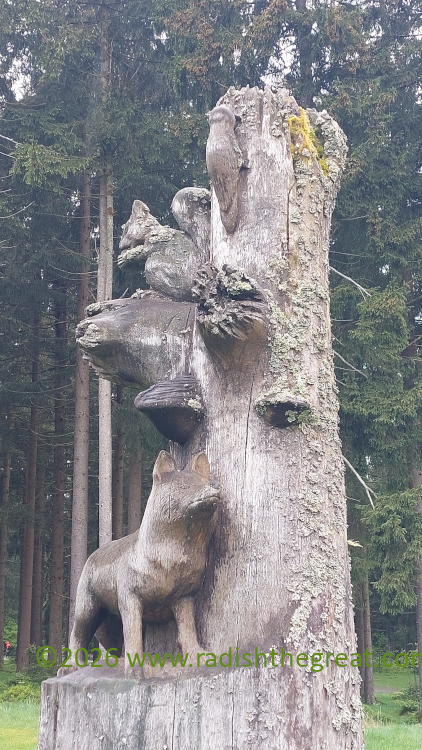
Then we went for a short, cold, rainy walk around the village of Frauenwald. Very short, due to the cold rain.
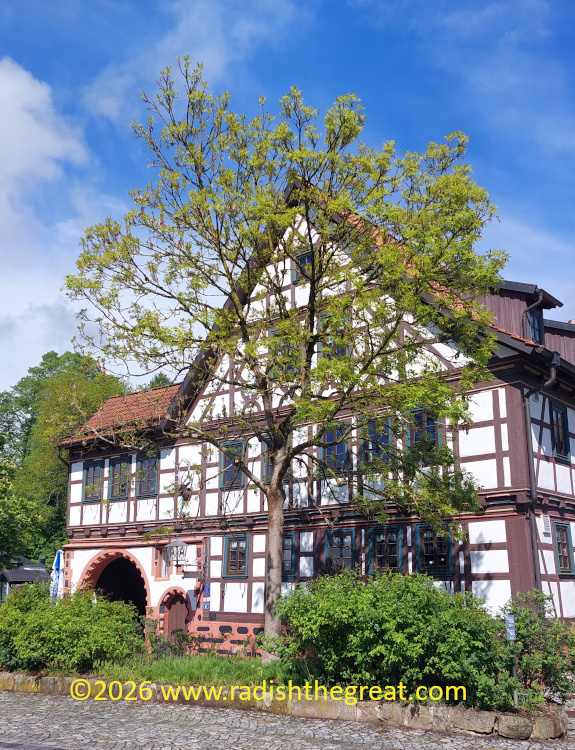
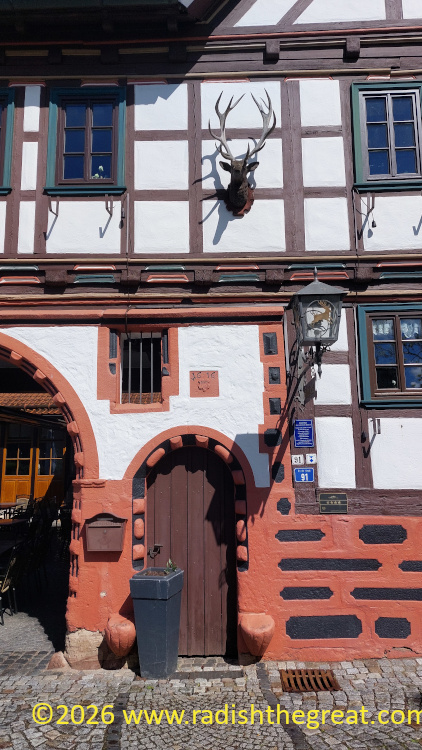
Then we drove into Suhl and checked into the Goldener Hirsch (golden deer), which has been a guesthouse since 1616 (we stayed in their 21st-century building across the street), and had a short walk around the neighborhood.
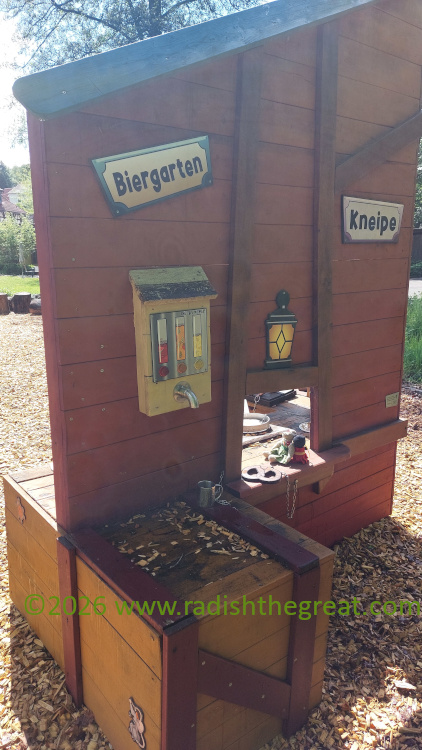
Out back behind the breakfast room (a 21st-century addition, but they did a nice job of blending it in) is one of the neatest playground constructions I have ever seen.
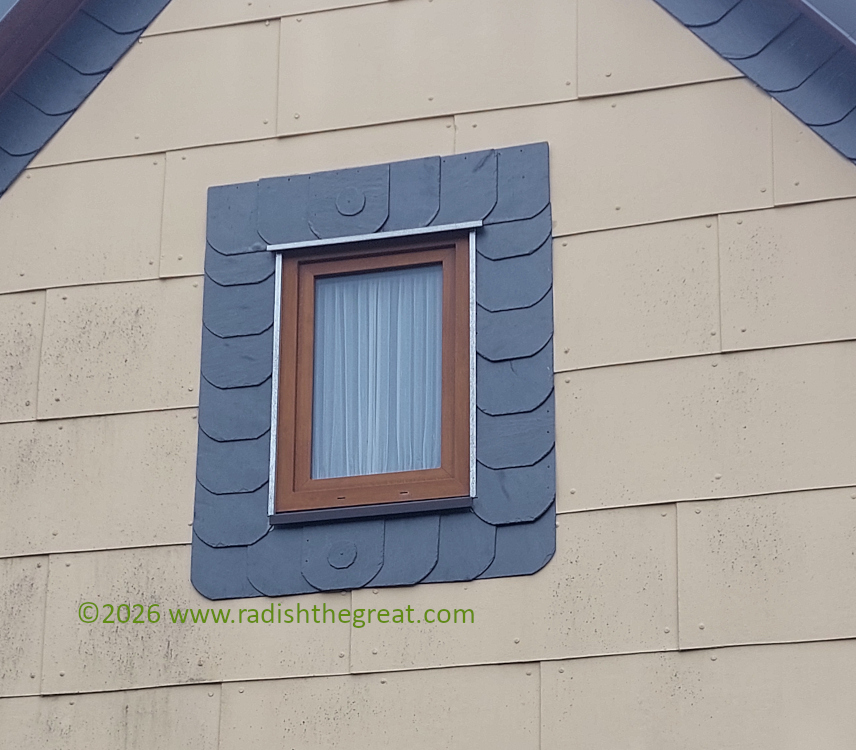
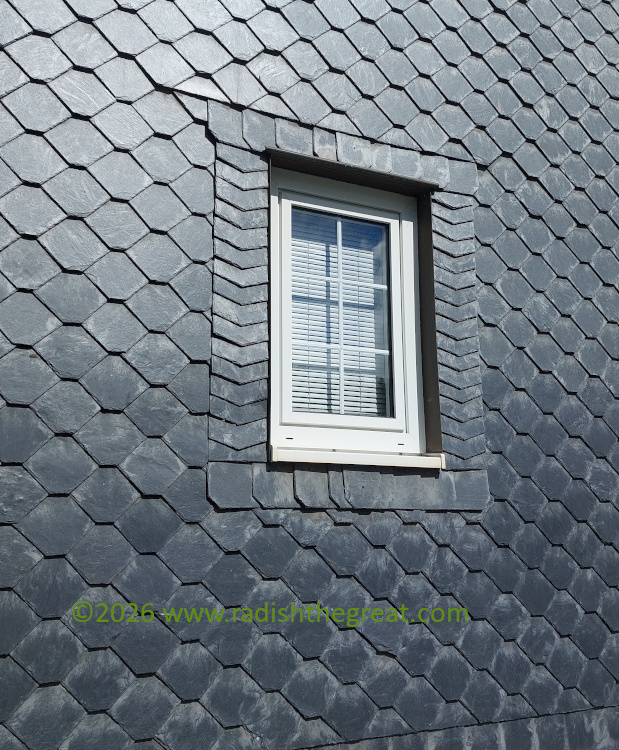
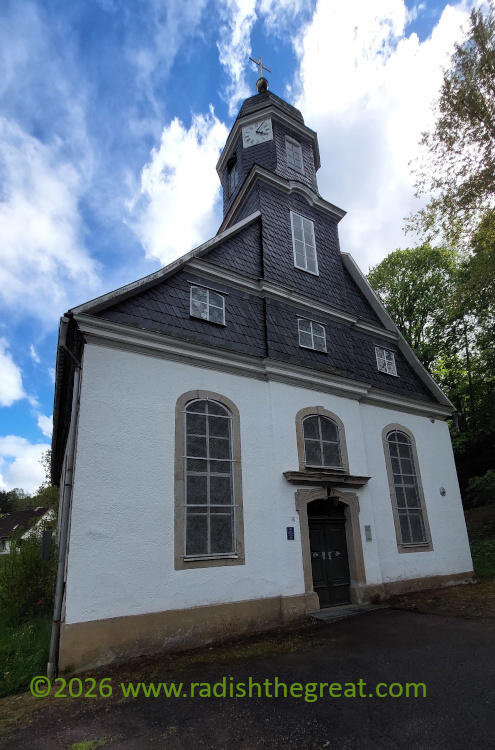
One of the things I noticed the first time I was in the Thüringer Wald (in 2021) was the houses covered with slate shingles in various shapes and patterns. Very quilty! Even houses with 20th-century siding or 21st-century concrete cladding have some slate elements. The slates are longer-lasting and more reusable than the “climate neutral” concrete, but “climate neutral” has absolutely nothing to do with “good for the environment” so…anyway. Photos.
The other vintage style of exterior walls that caught my attention is Fachwerkbau, translated as “half-timbered” in English. It’s similar to English Tudor construction, but often more elaborate. Hey, it’s a forest, there’s a lot of hardwood to work with.
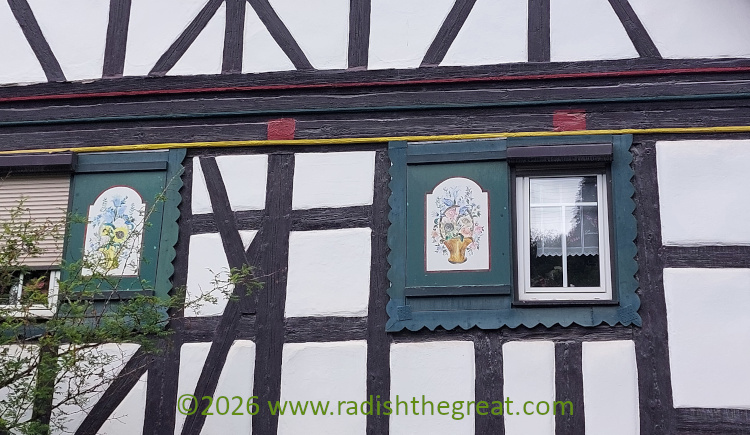
The next house was established as poorhouse in 1517, then converted to an orphanage in 1792. It seems to house some businesses now.
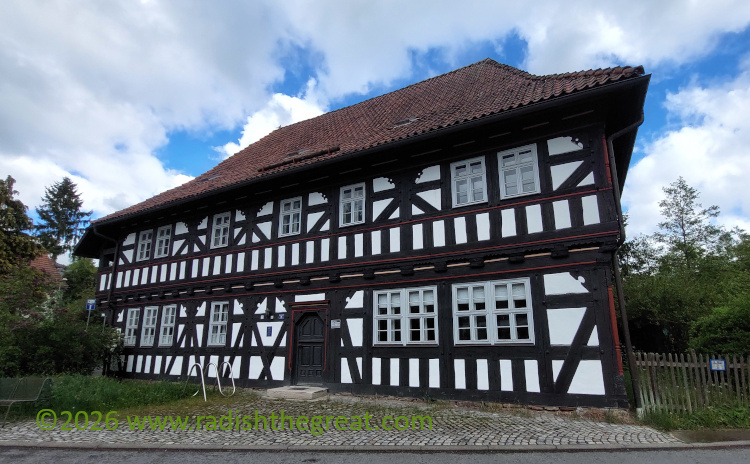
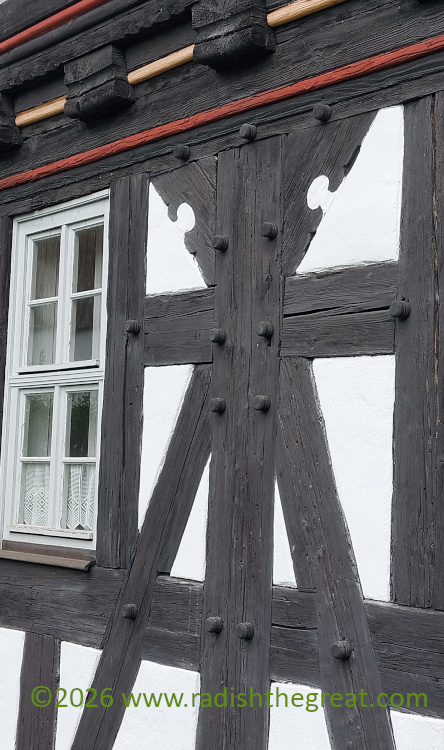
The Fachwerk is so popular, people in later centuries re-created it with brick.
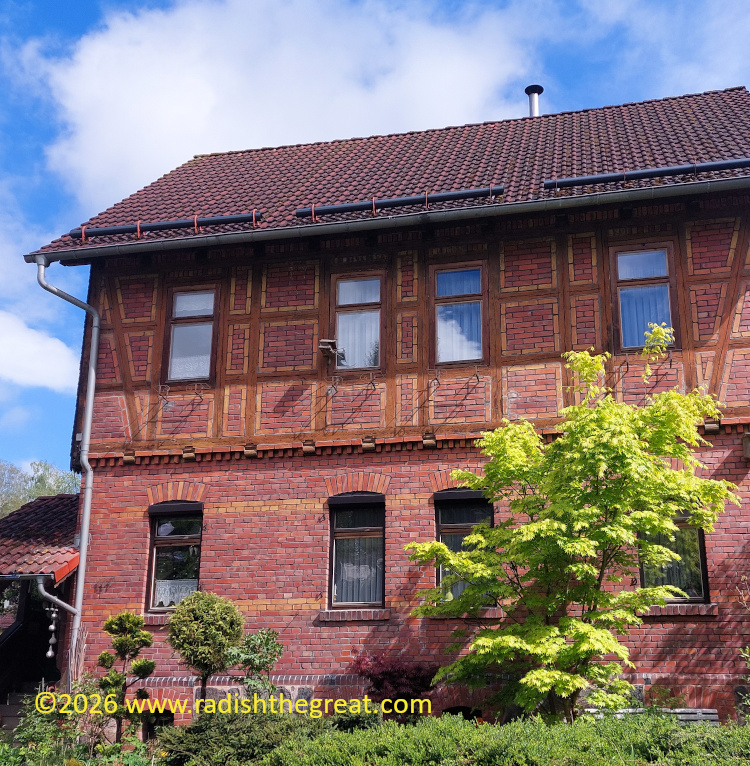
And here’s the house for the person who can’t choose between the methods:
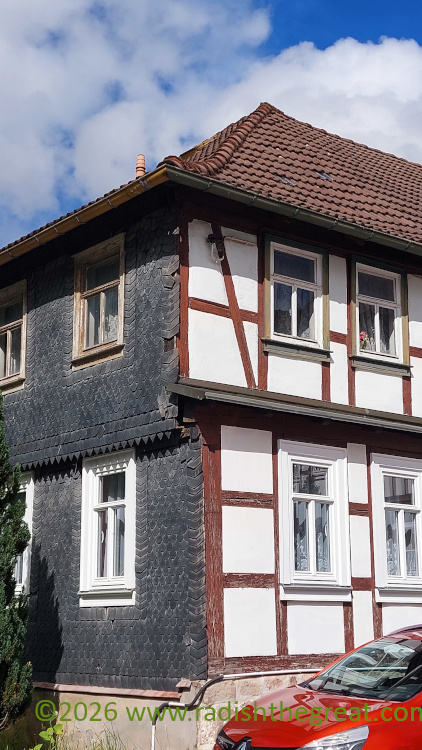
Lots of properties fell into disrepair in the Communist era and/or were abandoned afterwards, and they probably can’t all be saved.
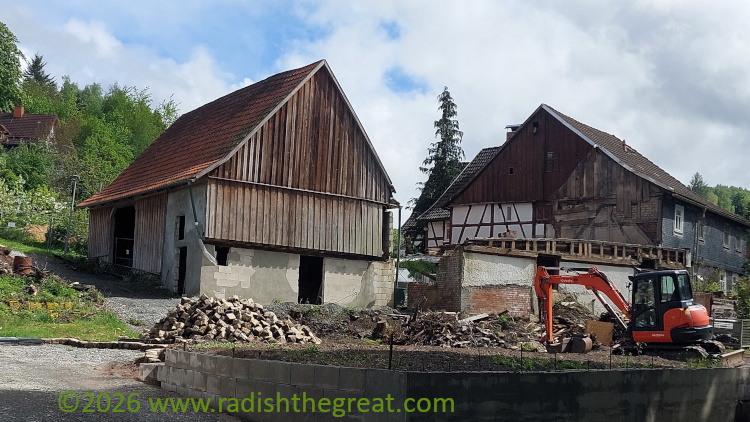
All those buildings were just a short walk from our hotel.
In the evening we ate in the restaurant at the Goldener Hirsch. I had a plate of roast venison with Thüringer Klöße, which are soft balls of shredded potatoes. Do not confuse them with Coburger Klöße, which are softer, or Bavarian Knödl, which are rubbery-er. You’ll just offend everybody, and you should never offend anyone who is preparing or serving your food. Of the three types of potato balls, I like these best, and the handmade ones were much tastier than the pre-made potato dough I purchased a few years ago. I will eat these again!
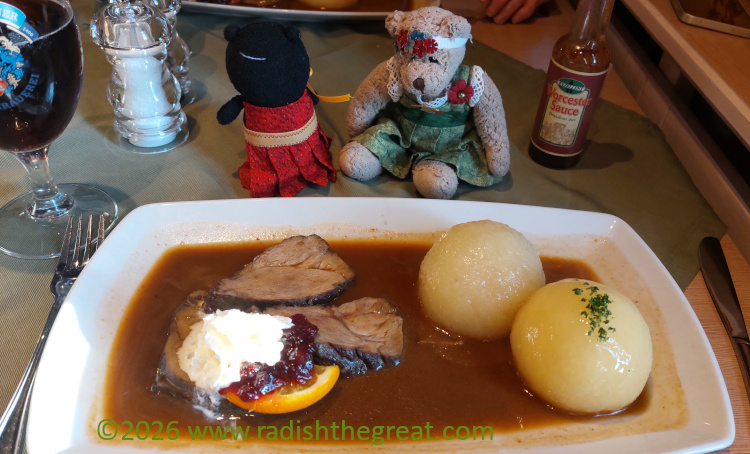
And that concludes our Friday.